
πŸ‡ΊπŸ‡Έ United StatesLicensing & ExamsEXAM BOARD REVIEW Β· 2026

NCSBN 2026 Passing Standard Review: Next-Gen NCLEX Pass Rates & Clinical Judgment Benchmarks

National Council of State Boards of Nursing confirms the current logit passing standard remains intact through 2026, while detailed scoring reports highlight unfolding case study mastery as the key differentiator.

SB

Dr. Sarah Bennett, DNP, APRN, CCRN

Director of Licensure & Nursing Education

Published: 2026-10-24
5 min read
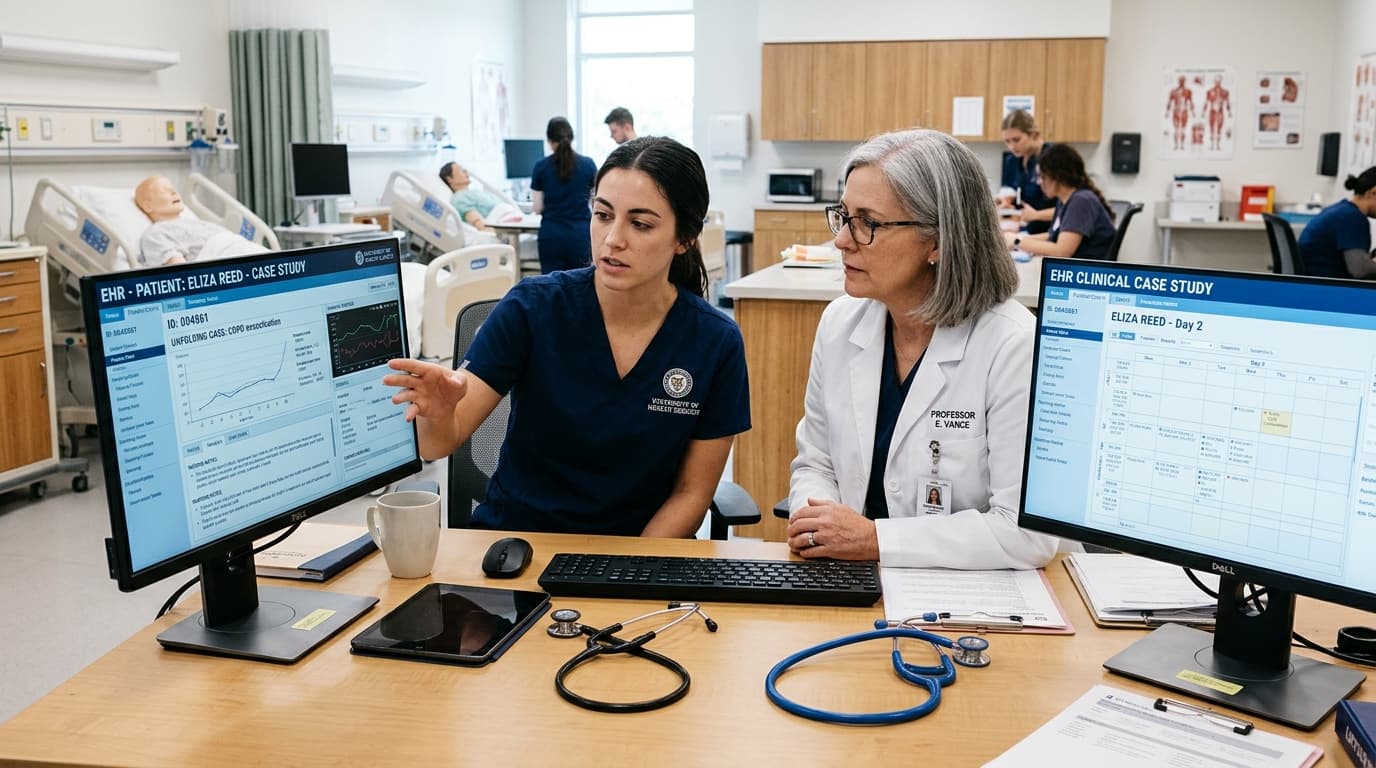
Next-Generation NCLEX Clinical Judgment interface on tablet and computer screen
Next-Generation NCLEX Clinical Judgment interface on tablet and computer screenNursingAtoms Editorial Photo Wire
Key Takeaways & Executive Summary
  • The NCLEX-RN passing standard of 0.00 logits remains unchanged for 2026 after comprehensive triennial review.
  • Partial credit scoring (plus/minus and zero/one scoring) on matrix and select-all-that-apply questions continues to reward clinical reasoning over pure memorization.
  • Unfolding case studies (6 linked questions across the 6 CJMM layers) account for the highest diagnostic variance between candidates who pass at 85 questions versus 150 questions.

NCSBN Board of Directors Upholds 0.00 Logit Benchmark

Following its rigorous triennial review process incorporating nurse educator panels, hospital preceptors, and psychometricians, the National Council of State Boards of Nursing (NCSBN) affirmed that the passing standard for the NCLEX-RN will remain at 0.00 logits on the Rasch measurement scale. The review confirmed that first-time pass rates among US-educated baccalaureate and associate degree candidates have stabilized at 88.5%, demonstrating that nursing curricula have successfully adapted to the Clinical Judgment Measurement Model (CJMM) introduced with the Next Generation NCLEX.

Scoring Breakdown: Why Unfolding Case Studies Matter Most

Unlike legacy NCLEX formats that relied strictly on isolated multiple-choice distractors, the 2026 exam centers on real-time clinical judgment across six iterative layers: 1. Recognize Cues: Filtering relevant lab values, vital trends, and EHR entries. 2. Analyze Cues: Linking assessment cues to underlying physiological processes. 3. Prioritize Hypotheses: Determining which patient risk requires immediate nurse action. 4. Generate Solutions: Selecting evidence-based interventions while ruling out contraindicated orders. 5. Take Action: Implementing priority bedside care safely. 6. Evaluate Outcomes: Re-assessing vital signs, cardiac rhythms, and lab values to verify therapeutic response.
Official Government Portal

Ready to Apply or Check Your Facility?

Visit the official CMS Workforce Portal to register your account, verify your facility's rural/shortage status, and submit your documentation before the 90-day grace period ends on January 24, 2027.

Related News & Policy Briefs

All Stories
Open Voice-to-Research