
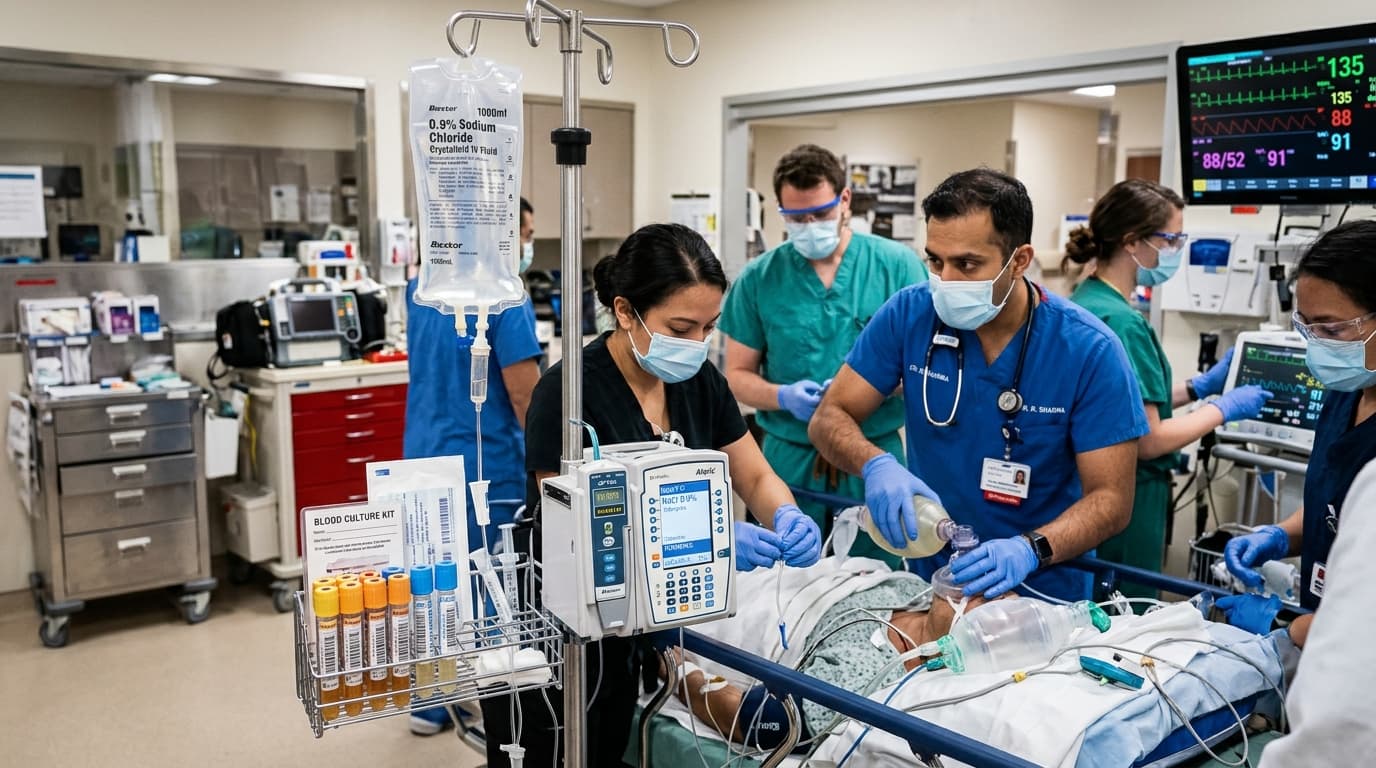
The Sepsis Six Protocol Breakdown
Remember the mnemonic: 3 IN and 3 OUT within 60 minutes of identifying red flags (NEWS2 ≥ 5 or single parameter 3):
1. GIVE Oxygen: Titrate supplemental O2 to achieve oxygen saturations of 94–98% (or 88–92% in patients with COPD / hypercapnic respiratory failure).
2. TAKE Blood Cultures: Draw at least two sets of blood cultures (aerobic and anaerobic) prior to antimicrobial administration, ensuring sterile aseptic technique.
3. GIVE IV Antibiotics: Administer empirical broad-spectrum IV antibiotics per local hospital antimicrobial guidelines. Every 1-hour delay in antibiotic administration increases mortality by 7.6% in septic shock.
4. GIVE IV Fluids: Initiate fluid resuscitation with a 30 mL/kg crystalloid bolus (e.g. Plasma-Lyte or Hartmann’s / Ringer’s Lactate) for hypotension or serum lactate ≥ 4 mmol/L.
5. TAKE Blood Lactate: Measure serial arterial or venous blood lactate to assess tissue hypoperfusion. Lactate > 2 mmol/L indicates cellular dysoxia.
6. MEASURE Urine Output: Insert an indwelling Foley catheter with urometer to assess strict hourly fluid balance and renal perfusion (target > 0.5 mL/kg/hr).
Red Flag Sepsis Clinical Criteria
Screen for Red Flags in any patient with suspected infection:
• Systolic BP ≤ 90 mmHg (or MAP < 65 mmHg)
• Heart rate > 130 bpm
• Respiratory rate ≥ 25 breaths/min
• Needs oxygen to maintain SpO2 ≥ 92%
• Non-blanching petechial or purpuric rash
• Not passed urine in the last 18 hours (< 0.5 mL/kg/hr)
• Blood lactate ≥ 2 mmol/L
• Altered mental state or acute drop in GCS